

LATYS FOCUS vs. Wi-Fi Extenders for IoT Connectivity
Stronger indoor Wi-Fi performance where connected devices need it most.
The problem with coverage-only fixes
Weak indoor signal areas, walls, distance, and growing IoT device counts can slow connected devices down. Wi-Fi extenders may push coverage farther, but they do it by repeating the signal. That extra relay step can reduce speed, add delay, and become a bottleneck when multiple IoT devices are active.
Why LATYS FOCUS is different
LATYS FOCUS improves the wireless path instead of repeating packets. The panel redirects and focuses existing Wi-Fi energy toward the area where the receiver is located, helping the network deliver stronger performance without the typical extender slowdown.
Directs signal energy toward the receiver instead of repeating Wi-Fi traffic.
Keeps latency low by avoiding an extra Wi-Fi relay hop.
Delivers stronger performance as more IoT devices are added.
Real indoor comparison
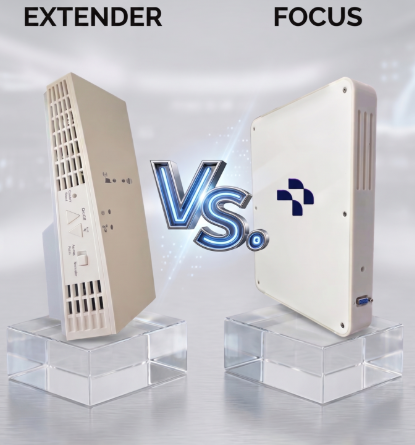
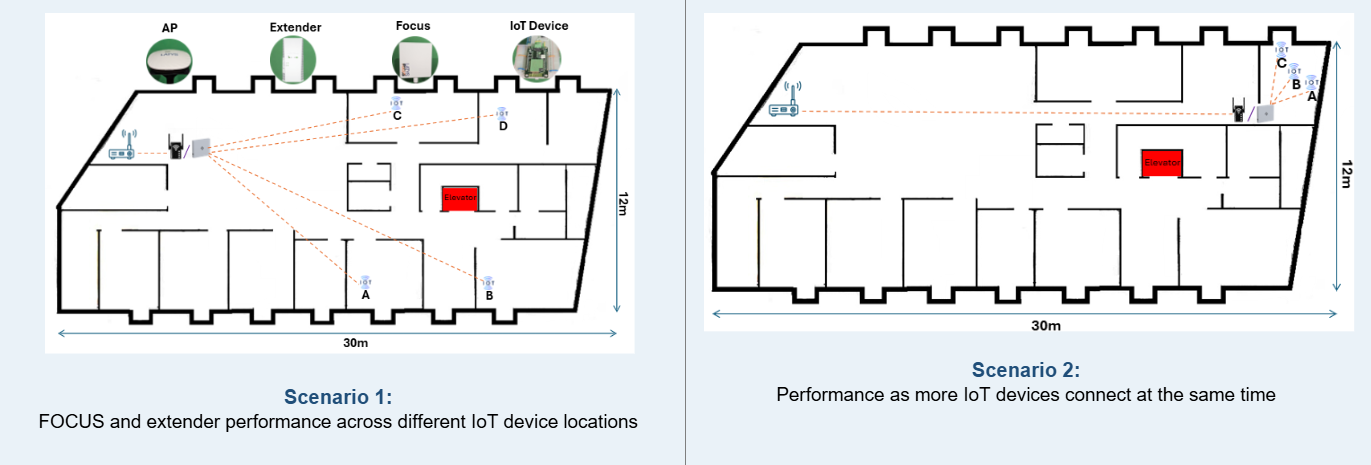
We compared a traditional Wi-Fi extender, and LATYS FOCUS in an indoor IoT setup. The goal was simple: show which approach gives connected devices better speed and faster response in real deployment conditions. Two scenarios were tested: devices placed across the building, and multiple IoT devices added at the same time.
What the tests showed
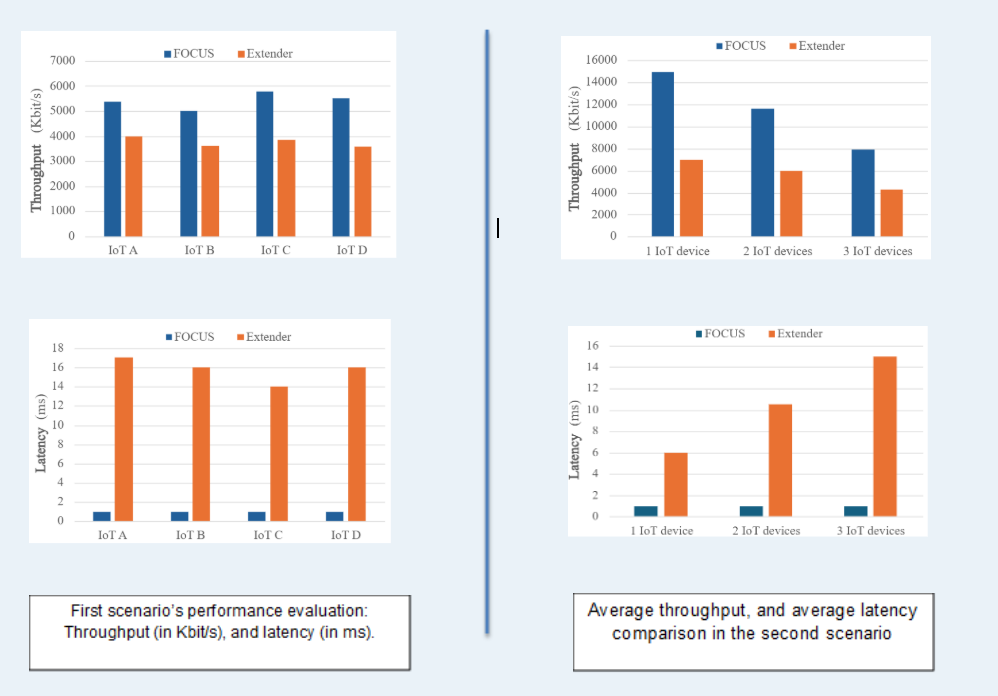
1. FOCUS delivered stronger throughput where Wi-Fi struggled. In challenging locations, LATYS FOCUS provided the best overall speed. It helped overcome weak-signal areas where obstacles and placement reduced performance, while the extender often delivered less useful throughput.
2. FOCUS kept latency low. In the first scenario, LATYS FOCUS stayed close to latency at about 1 ms. The Wi-Fi extender averaged around 16 ms because traffic had to be received and repeated before reaching the device.
3. FOCUS scaled better with more IoT devices. As more devices were added, the extender became the weakest option. LATYS FOCUS maintained stronger performance, making it a better fit for connected environments with growing device density.
What this means for IoT deployments
Coverage alone is not enough. IoT devices need stable speed and low delay to work reliably. LATYS FOCUS gives facilities a smarter way to improve weak zones because it strengthens the wireless path without adding the speed and latency penalties associated with Wi-Fi extenders.
Conclusion
For indoor IoT environments, better coverage should not mean slower response. LATYS FOCUS is a stronger alternative to Wi-Fi extenders because it directs Wi-Fi energy where it is needed, keeps latency low, and supports more devices without turning the extender into a bottleneck.
Replace extender trade-offs with directed Wi-Fi performance.
Talk to LATYS about using FOCUS to improve weak zones, increase throughput, and keep connected devices performing reliably.